All Categories
Featured
Table of Contents
Israel reacted with alarm to both the U.S. choice to lift sanctions on Syria and President Trump's conference with Ahmed al-Sharaa. Prime Minister Netanyahu apparently asked President Trump not to lift Syria sanctions in advance of Trump's trip to the region. Since the fall of the Assad program in December 2024, Israel has been wary of the former jihadist now in control in Damascus.
It has also deployed troops in southern Syria, inhabiting an increasing location beyond the demilitarized zone separating the two nations. Moving forward, Israel will stay careful of the Sharaa federal government and will likely continue to apply military pressure on Syria, including a broadened occupation of southern Syria and periodic air strikes.
Yet, Israel's openness to the Trump administration's efforts to broker a nonaggression pact in between Israel and Syria stays an open concern. Instead, Syria could end up being a locus of regional power competition between Israel and Turkey as both seek to apply their influence over Syria's trajectory. Considering that the fall of Assad in December 2024, Saudi Arabia has actually lobbied hard for the United States to lift Syria sanctions, citing them as a crucial challenge to the nation's reconstruction.
For MBS, the U.S. choice stood as an essential triumph emerging from Trump's trip. Going forward, Saudi Arabia will likely encourage the United States to continue along its course towards normalization with Syria. It may push for the repeal of the Caesar sanctions, which need to be undertaken by Congress. Riyadh may likewise press the United States to rein in Israel, must it continue with aggressive military action in Syria.
How Data Shapes Regional Corporate VisionAccelerating Regional Manufacturing Expansion Initiatives
Regardless of widening domestic and global criticism of Israel's technique, the prime minister has not wavered in his broadening occupation of Gaza in the absence of any U.S. pressure. The prime minister appears to bask in U.S. support, with no tip of a shift in policy. Moving forward, Netanyahu can be expected to continue along the same trajectory in Gaza, especially considering that a significant shift in U.S.
On the contrary, as the global protest versus Israel's actions in Gaza grows and with an increasing variety of U.S. allies moving to declare a Palestinian state, Israel is likely to entrench its position further, boosted by the prospect of ongoing U.S. assistance. Certainly, the Trump administration revealed its choice to deny visas to the Palestinian Authority management ahead of the UN General Assembly, seemingly in reaction to installing calls for declaring a Palestinian state.
Riyadh immediately turned down Trump's proposal and restated its rejection to normalize relations with Israel in the absence of significant development toward the creation of a Palestinian state. The kingdom has actually also strongly criticized Israel for the absence of sufficient help streaming into Gaza. Following the August 22 scarcity declaration, Saudi Arabia, while not calling out the United States, faulted the Israeli profession as the cause of the "humanitarian catastrophe" in Gaza.
Its leading function in promoting a two-state solution at the 80th UN General Assembly stands as its most popular effort in this regard. The kingdom will likely continue its behind-the-scenes lobbying of the United States to pressure Israel to relent on these demands, holding out on any development towards normalization with Israel in the absence of motion on these issues.
Accelerating Dubai Manufacturing Expansion Strategies
Its engagement in the Middle East is shaping the shapes of the emerging local orderwhether by default or design. Particularly, its choices on Iran, Syria, and Gaza all touch on core obstacles in the area and hold the possible to move each in a positive direction. Hazard and deepening dispute stand on the flip side of each opportunity.
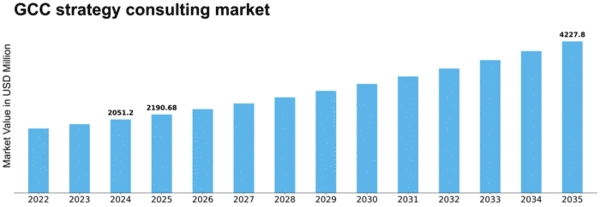
As global trade patterns straighten, a new investment passage is taking shape, connecting capital from the Gulf to Latin America. Sovereign wealth funds, conglomerates, and household offices from the Gulf Cooperation Council ("") are investing billions across Latin America's energy, farming, fintech, and infrastructure sectors. Trade in between Mexico and GCC states increased more than 33% in between 2021 and 2022, while non-oil trade with the UAE has actually almost folded the past decade.
3 Company sentiment reflects this momentum64% of Latin American executives plan to broaden engagement with the Gulf, particularly in agriculture, renewable resource, and digital services. 4 Underscoring this momentum, Saudi Arabia recently opened its first Chamber of Commerce workplace in Miami, additional signaling the growing links in between Gulf capital and the Americas.

Latest Posts
Why Is Business Excellence Vital for 2026 Expansion?
Why Does Business Excellence Crucial for 2026 Expansion?
Essential GCC Market Research Reports for 2026